2013-10-21 11:40:00 0
First, the similarities and differences in performance
1. Solid-state aluminum capacitors have a solid electrolyte conductivity of about 102 to 103 times higher than that of a general liquid electrolyte, and have a much lower ESR value than a liquid aluminum capacitor, reaching about 5 mΩ (measured value), so that the solid aluminum capacitor has excellent impedance-frequency characteristics. .
2. In the temperature range of use, the electrical properties of the solid electrolyte hardly change, so the solid aluminum capacitor has good temperature characteristics, and can maintain the electrical properties in a wide temperature range of -55 to 105 ° C; Under the circumstance, the electrical properties of liquid aluminum capacitors fluctuate greatly due to temperature changes.
3. Liquid aluminum capacitors transmit information by ion conduction in the electrolyte, so the speed is slow and is greatly affected by factors such as frequency and temperature; solid electrolytes rely on electronic conduction to transmit information, and there are no carriers like liquid electrolytes. Delay problem.
4. The solid aluminum capacitor allows a large ripple current. Due to the low ESR, solid-state aluminum capacitors can supply a large amount of current to the load in an instant, and the amount of heat generated by the Joule heat itself is small. Compared with the same size (φ8mm × 8mm and equivalent volume), the tantalum capacitor is 1900mA, the liquid aluminum capacitor is 630mA, and the solid aluminum capacitor can reach 6100 mA.
5. During the use of aluminum foil and electrolytic paper in liquid capacitors, vibration may occur due to the influence of the surrounding environment (such as in power amplifiers), which may cause "staining effect" on the signal and cause information loss; In the aluminum capacitor, the solid electrolyte fixes the aluminum foil and the release paper well, avoiding the above vibration.
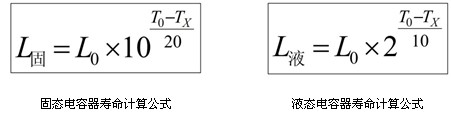
6. The solid electrolyte is not volatile and is not easily lost during use, so the service life is much higher than that of the liquid capacitor. Liquid aluminum capacitors follow the principle of a 2x increase in temperature for every 10°C drop in temperature; solid aluminum capacitors follow the principle of a 10x increase in temperature and a 10x increase in lifetime (as shown in the table below).
Solid Al.E Capacitor | Wet Al. Capacitor |
105℃ 2,000h | 105℃ 2,000h |
95℃ 6,300h | 95℃ 4,000h |
85℃ 20,000h | 85℃ 8,000h |
75℃ 63,000h | 75℃ 16,000h |
7. Since the solid electrolyte does not contain active ions that can repair the aluminum oxide film, the current pressure level of the solid aluminum capacitor is limited by the current state of the art. At the current industry level, the average operating voltage of solid aluminum capacitors is only 50v, while the working voltage of liquid aluminum capacitors has reached more than 500v.
Second, the similarities and differences of the process
The main differences between the manufacturing process of solid aluminum capacitors and liquid aluminum capacitors are:
1) The element needs to be carbonized before impregnation to reduce the impedance of the separator and improve the adsorption;
2) Replenishing treatment is required before impregnation, in order to repair damaged oxide film and repair bare aluminum caused by aluminum foil cutting;
3) After the impregnation is completed, heating polymerization is required;
4) The aging mechanism is different from liquid aluminum capacitors.
Taken together, the difference in performance can be expressed in the following table:
The Fertures of Conductive Polymer Capacitor Compared to Other Aluminium Capacitors
Characteristics
Characteristics Type of Capacitor | 小型化 | 频率特性 | 温度特性 | 电压 | 容量 | 寿命 | 价格 × ESR | |
液体铝电容器 | ◎ | × | × | ○ | ◎ | × | △ | |
卷绕结构固态电容器 | 有机半导体型 | ◎ | ○ | ○ | × | ◎ | ○ | ◎ |
导电高分子型 | ◎ | ◎◎ | ◎ | × | ◎ | ◎ | ◎ | |
叠层结构固态电容器 | ◎◎ | ◎ | ◎ | ×× | △ | ○ | ○ | |
where:good←◎○△×→bad
Copyright: Shenzhen PolyCap Electronic Technology Co., Ltd. www.polycap.cn, please indicate the source.










 QQ咨询
 在线客服